

🔊 Physics of Sound
The physics of sound is one of the most important foundations in audiovisual technology.
Understanding how sound behaves helps audio technicians work with microphones, speakers, acoustics, live events, recording studios and broadcast systems.
What is Sound?
Sound is a mechanical vibration that travels through a medium such as air, water or solid materials. Sound cannot travel through a vacuum because it requires a physical medium.
These vibrations create pressure variations that can be detected by the human ear.
In professional audiovisual systems, sound is captured by microphones, processed through mixers and reproduced using loudspeakers or headphones.
Sound Waves
Sound travels in waves. A sound wave contains areas of compression and rarefaction that move through the air.

The shape of a sound wave determines how a sound will be perceived by listeners.
Different waveforms produce different tones and timbres.
Frequency
Frequency refers to the number of vibrations per second and is measured in Hertz (Hz).
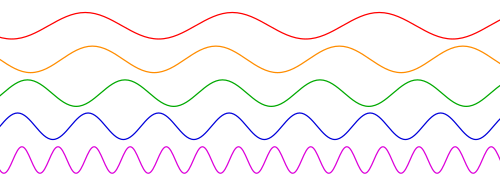
- Low frequencies produce bass sounds.
- High frequencies produce treble sounds.
In professional sound systems, equalizers are used to control frequency ranges and improve audio clarity.
Amplitude
Amplitude represents the intensity or energy of a sound wave.

Higher amplitude means louder sound pressure levels.
In audio engineering, amplitude is closely related to gain structure and signal levels.
Improper gain settings may cause distortion or excessive noise.
Wavelength
Wavelength is the physical distance between two identical points in a wave cycle.

Low frequencies have longer wavelengths, while high frequencies have shorter wavelengths.
This is extremely important in speaker placement, room acoustics, phase alignment, and subwoofer systems.
Practical Applications
Understanding sound physics is essential for live concerts, recording studios, theater productions, broadcast systems, podcasting, and streaming setups.
Common mistake: Many beginners increase volume levels without understanding microphone positioning, room acoustics or frequency balance.